
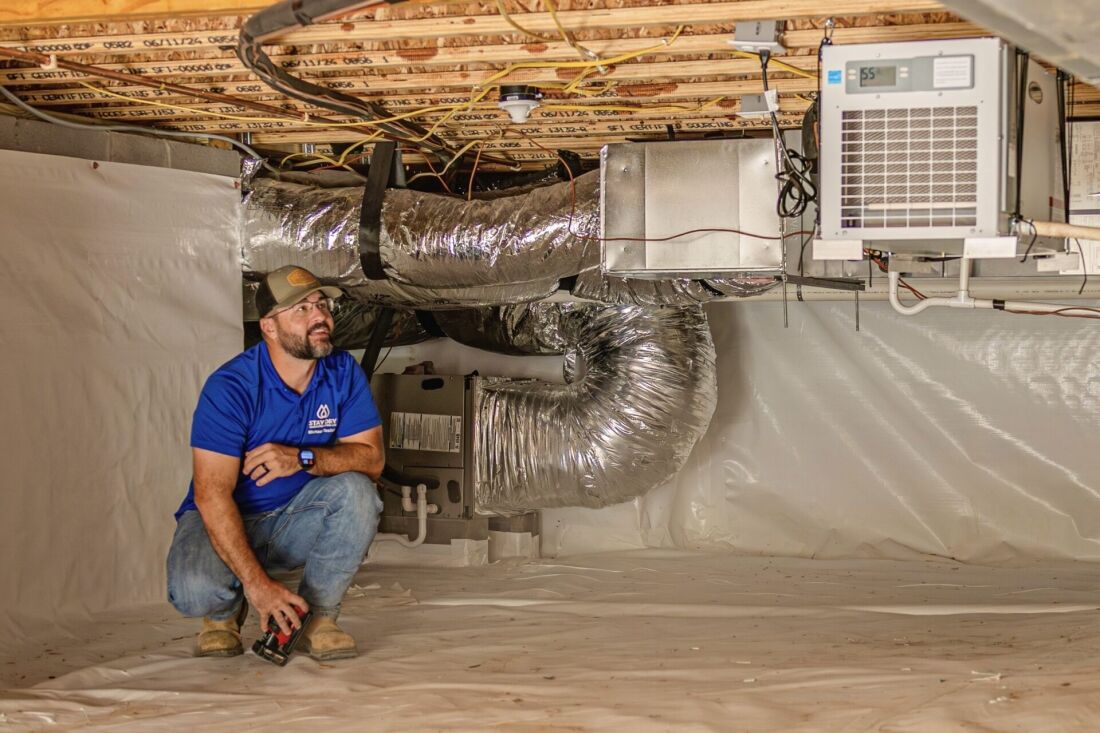
If your basement gets damp or your foundation leaks, we want to find the source fast. A one-inch rain can drop about 1,250 gallons on a 2,000-square-foot roof, which is enough to overload gutters and push water toward the foundation. It is important to look for musty odors, visible stains, condensation, and foundation cracks to spot trouble early. At Stay Dry Waterproofing LLC, we can help determine when a dehumidifier, basement waterproofing, or better drainage will help control humidity and mold.
A damp basement often signals hidden moisture problems. It is important to pay attention because issues like mold or mildew can point to trouble with home insulation, vapor barriers, or ventilation systems.
We notice musty odors as a key symptom of basement moisture problems. Mold and mildew growth in damp conditions release those smells, while poor ventilation and excess humidity above 30% intensify the odor. We suspect hidden water intrusion or mold growth when smells persist from concrete cracks, hydrostatic pressure, or clogged downspouts. Tightly sealed homes trap moisture and pollutants, which lowers indoor air quality unless we provide 8 to 12 air changes per day. We recommend a basement dehumidifier, improved ventilation, or vapor barriers to help control humidity.
Visible water stains often reveal serious moisture issues in our basements. We frequently see these unsightly marks around foundation cracks or leaks. Stains may appear as darkened patches on walls or floors, signaling that water has made its way inside.
A one-inch rain can deliver about 1,250 gallons of water to a roof of a 2,000-square-foot home. If we fail to drain this properly, it leads to visible damage.
Moreover, efflorescence may emerge alongside these stains. This white powdery residue is the result of salts left behind after water evaporates from concrete or masonry surfaces. Peeling paint and blistering wallpaper are other signs we observe due to basement moisture entering our homes.
Clues like these indicate that prompt action is necessary to prevent further deterioration in our spaces.
Peeling paint or wallpaper often signals moisture problems in our basements. As we inspect the walls, we might notice staining and blistering on wall coverings caused by dampness. This detachment can stem from efflorescence creeping behind the paint or wallpaper.
Over time, persistent dampness weakens adhesives, leading to more blisters and tears.
High humidity levels can accelerate these issues too. When relative humidity rises above 30%, mold and mildew thrive behind those peeling layers. Moisture enters through vapor diffusion or capillary suction, affecting finishes at the base of our walls or near foundation cracks.
Addressing these signs early helps us maintain a dry basement environment and protect our building foundation from further issues.
Mold grows quickly in damp environments. Spaces with over 30% humidity are at risk. We often see mold thriving in finished basements or anywhere moisture collects. Poor ventilation worsens the problem, leading to musty odors and health concerns.
Mold can damage carpets, wood, and other organic materials.
Visible or hidden mold colonies can hide in high-moisture areas of our basements. The stack effect pulls humid air into these spaces, increasing the chances of condensation and water intrusion.
Protecting our homes means addressing these moisture issues promptly to maintain good indoor air quality and safeguard our health from respiratory problems.
Poor drainage around your home can lead to water pooling near the foundation. Cracks in your basement walls may let moisture seep in too. Groundwater often finds its way inside during heavy rains or snowmelt.
Understanding these factors will help you keep your basement dry and safe. Read on to discover more about identifying and solving these issues!
Inadequate grading causes serious problems for our basements. Ground that is level or slopes toward the house directs water into our space. This can lead to dampness and mold growth, which are issues we want to avoid.
Backfilled soil often settles without proper compaction; this creates drainage challenges around our homes.
Corrective grading should slope away from the foundation at least 1 inch per foot for a minimum of 6 feet. We need to install gutters and downspouts properly to avoid concentrating water near the foundation.
Cracks in foundation walls often signal serious issues. We notice that concrete and block foundations develop cracks due to settling or improper connections. These structural cracks allow water infiltration, which can lead to damp basements and mold growth.
To address these problems, we must ensure proper footing design and secure connections like anchor bolts or straps. Sealing active leaks requires using hydraulic cement or epoxy-based sealants; both methods create a waterproof barrier over the cracks.
Regular inspection helps us catch these issues early before they worsen.
Groundwater intrusion causes many damp basements, especially during heavy rain or when the water table rises. We often see this issue impacting homes in Alabama and other regions.
When water seeps into our foundations, it can lead to significant problems like mold growth and air quality issues.
To manage groundwater intrusion effectively, we recommend installing French drains around the foundation. This strategy redirects excess water away from our home, protecting against leaks and moisture buildup.
A proper drain tile system is crucial as well; it must consist of a minimum of 12 inches of coarse aggregate surrounding the tile for efficient drainage. Regular inspection helps us maintain these systems before serious damage occurs.
To find the source of moisture, we must examine the exterior of our home first. We inspect the grading and downspouts to ensure they direct water away from the foundation. Next, we investigate potential cracks in our walls to spot leaks.
We also test whether we’re dealing with condensation or seepage inside our basement.
We focus on the exterior grading and gutters to prevent moisture from entering your basement. Proper drainage involves checking if the ground slopes away from the foundation. Ground that is level or slopes towards the house directs water into the basement, so we ensure a slope of at least one inch per foot for a minimum of six feet. We also inspect gutters and downspouts for blockages or damage. Defective or missing gutters can lead rainwater toward the home’s foundation. Each section of roof eaves requires one downspout per 50 linear feet, and extensions should discharge water at least four feet away. We also evaluate concrete sidewalks around the property to ensure they are sloped correctly. Regular maintenance of these systems prevents blockages and ensures that rainwater flows freely away from the foundation.
We examine the foundation for cracks or leaks to reveal hidden issues. This includes inspecting interior walls and floors for visible cracks, as even small openings can let moisture enter the basement. We look for signs of water entry such as white powdery residue or surface scaling which shows where water has seeped through. We assess both horizontal and vertical cracks carefully, using hydraulic cement to seal any active leaks. We prepare the area before applying sealants by widening any cracks and removing loose material. We also use epoxy-based sealants to create a waterproof barrier over foundation cracks to prevent moisture ingress. Staying proactive helps avoid larger issues down the line.
We can identify the source of moisture in your basement by testing for condensation versus seepage. We use a hygrometer to measure humidity levels to see if they exceed 30%, as high humidity leads to condensation. During summer months, we inspect cold walls and floors for water formation, which usually points to condensation. Conversely, visible water seeping through cracks indicates that groundwater is entering and needs attention. Assessing ventilation methods and using dehumidifiers can help cool down the space and reduce condensation risks. Built-in systems can manage a high volume of moisture per day to keep the environment stable. Consult with Stay Dry Waterproofing LLC if you suspect persistent seepage issues remain unresolved after initial assessments.
We understand that damp basements and foundation leaks cause worry for many homeowners. Recognizing the signs early can prevent further damage. Inspecting the drainage, foundation cracks, and humidity levels helps us find the source of moisture issues.
Taking action now safeguards our homes for years to come. With proper solutions in place, we can create a dry, healthy living environment together.
Check out our social pages for updates on what we have going on!

Stay Dry Waterproofing LLC
12500 Bedford Forrest Ln, McCalla, AL, 35111
Monday - Friday: 6:00am - 6:00pm