
Are high energy bills, bouncy floors, and a musty crawl space making you wonder if crawl space encapsulation is the missing fix for your Alabama property? In most cases, the solution isn’t one “magic” product. It’s a system: crawl space drainage, sealing, a tough 15- to 20-mil vapor barrier on the floor and walls, and the right moisture equipment so your HVAC isn’t fighting swamp air under the building. Let’s walk through what encapsulation is, how it supports heating, air conditioning, and ventilation, and the practical steps that make the biggest difference.
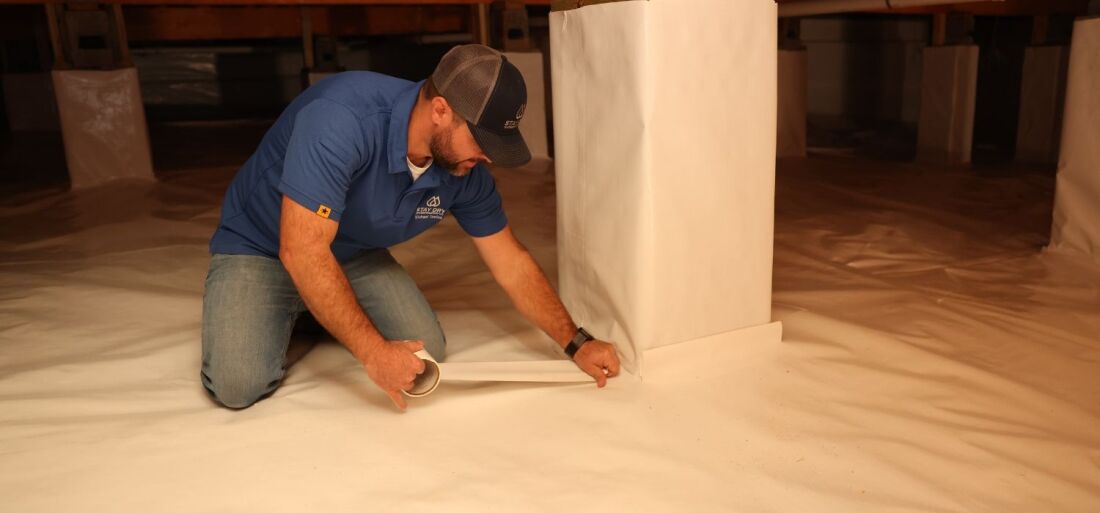
Crawl space encapsulation means turning the area under your building into a sealed, controlled space. We line the ground and foundation walls with a heavy-duty vapor barrier (typically 15–20 mil), seal vents and gaps, and control humidity with a dedicated dehumidifier or code-compliant ventilation.
Done right, encapsulation isn’t “plastic on dirt.” It’s water control, air sealing, and moisture management working together to help keep the space dry and predictable. Here’s an overview of what it can involve:
ENERGY STAR’s guidance on closed crawl spaces puts “evaluate first” ahead of “seal first,” including checking for bulk water sources, combustion safety for fuel-burning appliances, and pests like termites before converting the crawl space. That order matters in Alabama.
In many Southern builds, we also leave a small inspection strip near the top of the foundation wall so pest professionals can still see termite activity, which is a detail ENERGY STAR includes in its closed crawl space design notes.
For larger spaces, the scope of a crawl space encapsulation installation can be significant. In a 3,000-square-foot crawl space, a four- or five-person crew may need about two weeks if drainage work, liner sealing, and mechanical upgrades are included in the plan.
Across the U.S., many full encapsulation projects land in the several-thousand to low five-figure range, with the biggest swing coming from water management needs (not just the liner).
When your HVAC ductwork or air handler sits in a damp, vented crawl space, your system ends up conditioning “outside” air that never should have been there. Encapsulation changes that by tightening the building envelope under your floors and controlling humidity at the source.
Here’s what you’ll see:
Encapsulation works best when the crawl space becomes a “semi-conditioned” area, meaning it’s sealed from outdoor air but still managed with controlled drying or controlled air exchange. If a waterproofing service plans to seal the crawl space completely, ask how they’re handling the “controlled air” part, not just the liner.
ENERGY STAR’s published savings methodology estimates that whole-home air sealing and insulation improvements can reduce heating and cooling energy use by about 15% on average. Encapsulation supports that goal by tightening one of the leakiest, dampest zones in many Alabama structures, the crawl space.
Moisture control is where encapsulation earns its keep in Alabama. The liner blocks ground vapor, sealed vents reduce humid outdoor air intrusion, and a dehumidifier keeps conditions stable even during muggy stretches.
Environmental Protection Agency guidance on moisture and mold recommends keeping indoor relative humidity below 60% (with 30%–50% as an ideal target range when possible). ENERGY STAR’s crawl space guidance also references drying a crawl space down into that lower range before finishing sealing and insulation work.
For many Alabama homes and small commercial properties, we aim for a crawl space humidity setpoint around 50%–55%. That’s low enough to discourage mold and wood moisture problems, without over-drying framing in normal operation.
Alabama sits in warm-humid climate zones, and that humidity is the whole story. Encapsulation helps because it reduces the “wet air exchange” that vented crawl spaces invite for much of the year. Here’s what you’ll notice:
Encapsulation can make indoor air quality easier to manage because it reduces the crawl space as a source of mold spores, odors, and soil gases moving up into the building.
In ENERGY STAR’s crawl space guidance, “air transport” is one of the major moisture pathways, meaning unsealed joints and penetrations can move moisture (and soil gases) into enclosed spaces. Sealing those pathways helps your HVAC filters and ventilation do their job without fighting an upstream source.
If you’re converting a crawl space to a sealed design, we also recommend thinking about radon in a straightforward way: test, then decide. Here’s what to consider:
If a fuel-burning appliance sits in the crawl space, address combustion safety before sealing and conditioning the space.
Encapsulation usually helps most when your HVAC equipment or ductwork runs through the crawl space, or when a vented crawl space is pulling in outdoor humidity that your air conditioning must remove.
If your Alabama property has a damp, musty crawl space, crawl space encapsulation can be one of the most effective upgrades for comfort and HVAC performance. The best solutions seal the floor and walls with a tough 15- to 20-mil vapor barrier, fix crawl space drainage first, and then control humidity with ventilation and dehumidification.
At Stay Dry Waterproofing LLC, we offer free inspections and back our work with strong workmanship warranties. Contact us to learn more about crawl space encapsulation and if it’s the right choice for your property.
Check out our social pages for updates on what we have going on!

Stay Dry Waterproofing LLC
12500 Bedford Forrest Ln, McCalla, AL, 35111
Monday - Friday: 6:00am - 6:00pm