You know how Alabama basements can look fine on the surface, yet a damp wall and a musty smell keep showing up? That’s exactly why we focus on mold and mildew prevention for Birmingham, AL, basements. Mold thrives when moisture sticks around, especially in warm, humid conditions. In Birmingham, average humidity levels remain high enough that basements and crawl spaces often require a clear plan rather than a quick fix.
We built this guide around practical steps we use every day: tracking humidity, stopping water intrusion, and improving air movement. We also rely on guidance from the Environmental Protection Agency (EPA) and the Institute of Inspection Cleaning and Restoration Certification (IICRC) to keep decisions grounded in proven remediation and restoration practices.

In Alabama, we see the same pattern again and again: humidity climbs, ventilation falls short, and a small leak becomes recurring water damage. Once moisture becomes routine, spores can settle into framing, drywall paper, stored cardboard, and dust, then turn into visible fungal growth.
A helpful way to think about basement mold prevention is to separate the root causes into three buckets: moisture in the air, moisture on surfaces, and moisture moving through the structure:
When we address all three, mildew prevention becomes much more reliable for basements and crawl spaces across the Birmingham area.
High indoor humidity fuels mold growth in basements across Birmingham. A simple hygrometer gives you the number that matters, relative humidity, so you can respond before mildew becomes visible.
The Environmental Protection Agency notes that indoor humidity should stay below 60%, and ideally land in the 30%–50% range when you can keep it there. The Alabama Department of Public Health guidance also calls out a practical seasonal target: 20%–40% in winter and under 60% the rest of the year. When humidity stays high, condensation becomes the silent starter for mold growth on cold concrete, metal ductwork, and water lines.
Inadequate venting traps damp air, and basements feel it first. Moist air that can’t exit the home migrates downward and condenses on cooler surfaces. We pay special attention to kitchens, bathrooms, and laundry areas because they generate moisture quickly. If those spaces lack working exhaust fans or if the ducting leaks, the basement often becomes the collection zone.
Dryer exhaust is a big one. The International Residential Code requires dryer exhaust systems to vent moisture to the outdoors, so venting into a crawl space or basement runs counter to mildew prevention.
Leaks are the fastest path to mold growth because they deliver moisture directly into materials that hold it. We inspect for the obvious sources, like plumbing leaks and overflow events, and for the hidden ones, like seepage through walls and slabs.
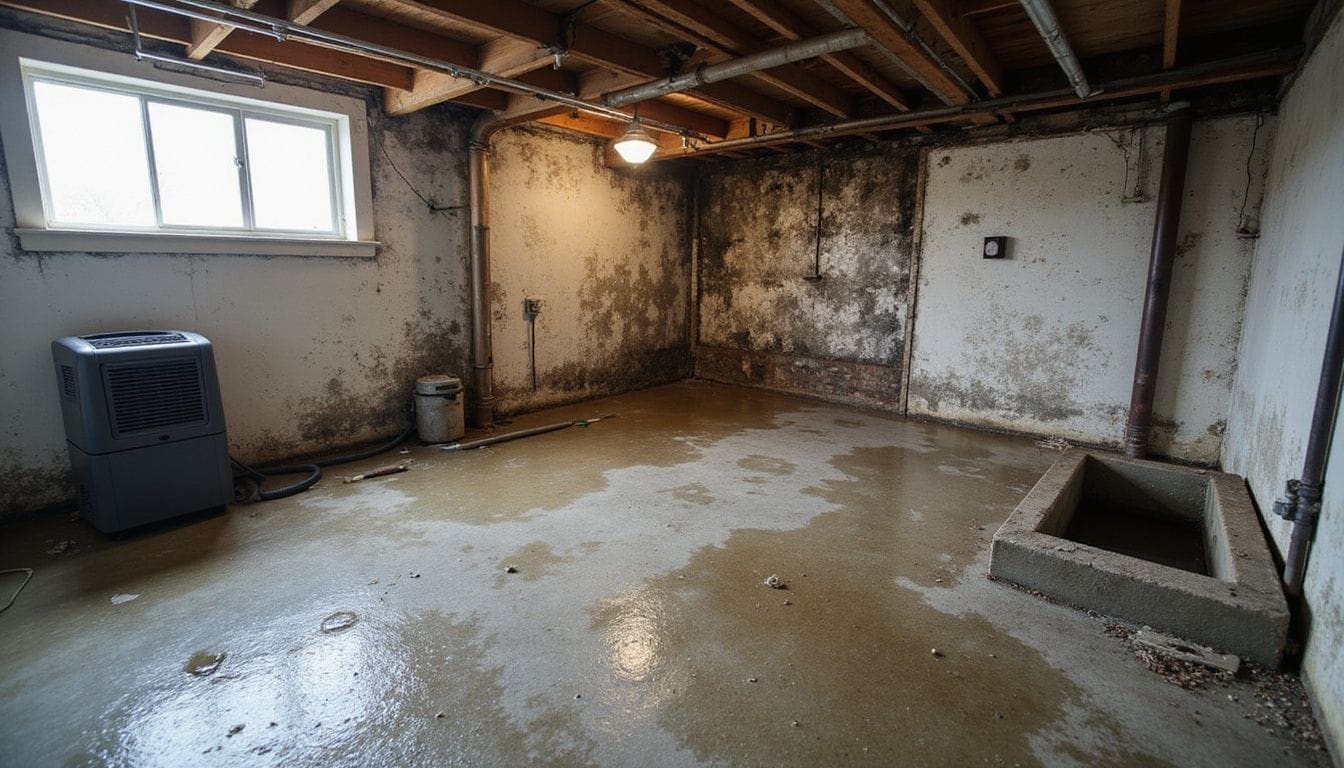
Standing water and water stains can indicate active leaks, but you may also have concealed water damage behind finished walls or under the flooring. A moisture meter helps us confirm what a wall feels like versus what it is actually holding.
If water keeps returning, we treat it as a waterproofing and drainage problem first, then address mold removal and remediation. That order prevents repeat contamination.
We approach prevention the same way we approach restoration work: control humidity, block bulk water, and keep air moving. When those three pieces work together, basements stay drier, indoor air quality improves, and the risk of wood rot drops.
Below is our recommendation for Alabama basements and crawl spaces, including what to measure, repair, and upgrade.
Humidity control is the daily driver for basement mold prevention. A dehumidifier only helps if you size it correctly, place it well, and keep it running continuously.
One detail many homeowners miss is the rating label. ENERGY STAR explains that dehumidifier efficiency and capacity ratings have shifted under a new Department of Energy test procedure that began in 2019, so older and newer pint-per-day numbers don’t always compare one-to-one. We also recommend sealing obvious air leaks, like rim joist gaps and pipe penetrations, because humid outdoor air can feed basement humidity even when there is no visible leak.
Drainage is the foundation of waterproofing. If you keep roof and surface runoff away from the home, you reduce soil saturation and hydrostatic pressure, which means less seepage through basement walls and joints. ENERGY STAR water management guidance includes a straightforward benchmark: put downspouts at least 5 feet away from the foundation.
When we build a plan, we connect the dots between where water lands outside and where moisture shows up inside. That’s how you prevent recurring water damage, rather than treating symptoms.
Ventilation is about more than fresh air. In basements, the goal is to prevent still, damp pockets where condensation can form on concrete, pipes, and ductwork. If you add ventilation without dehumidification in a humid climate, humidity can still climb. We usually treat ventilation and dehumidification as one coordinated system.
Cracks and gaps let moisture in and can also allow humid air to reach cool surfaces, where it condenses. Sealing helps with waterproofing and improves overall moisture control.
When walls bow or exhibit structural movement, we look beyond sealing alone, discuss stabilization options, and conclude with a moisture-control plan to protect repairs.
We don’t wait for a full-blown mold problem to act. Early signs usually show up as odor, staining, and humidity readings that do not match the season or HVAC operation. A basic toolkit helps you spot issues early: a hygrometer for humidity, a moisture meter for materials, and a clear visual scan of corners, closets, and stored items.
We often notice a musty smell before we see mold. That odor can signal hidden growth behind basement walls, under carpet, or inside storage cabinets.
If the smell persists, assume moisture is still present somewhere. The next step is to check the humidity readings and then trace likely sources, such as seepage points, plumbing joints, sump pump discharge issues, or condensation on cold lines. When odors keep returning after dehumidifying, we recommend a focused mold inspection to identify the moisture source and confirm whether materials require removal or remediation.
Visible stains in black, green, or white often indicate active mold or mildew growth. Texture varies. It can look cottony, velvety, or granular, and staining often clusters where moisture persists.
Dark staining on water-damaged drywall or wood may indicate Stachybotrys chartarum, but visual inspection alone isn’t a reliable means of identification. What matters most is removing moisture and safely dressing contaminated materials.
If you see repeated discoloration in the same spot, we treat it as a building moisture problem first, then design the mold removal and mold remediation steps around that root cause.
Basement mold prevention works when you treat moisture control as a system rather than a single device. We focus on humidity control, drainage, and ventilation to keep basements stable through Alabama’s weather swings.
If you need mildew prevention in a Birmingham basement, start with measurements, then fix water entry, and only then move into cleanup and repairs. That order protects indoor air quality and reduces the risk of recurring microbial growth.
High humidity, standing water, roof or pipe leaks, and poor ventilation cause mold and mildew in Alabama basements. Humidity above 60% significantly increases the risk.
Control indoor humidity with a dehumidifier and run vents to move moist air out. Fix leaks quickly and install effective drainage systems around the foundation to keep water away. Seal cracks and insulate cold surfaces to stop condensation.
No. Mold needs moisture more than dirt, so clean homes can still get mold if they stay damp.
Call a pro if mold covers more than about 10 square feet, keeps coming back, or affects HVAC systems. Also, call one if people in the home have health symptoms from mold.
Check out our social pages for updates on what we have going on!

Stay Dry Waterproofing LLC
12500 Bedford Forrest Ln, McCalla, AL, 35111
120 19th St N Ste 208, Birmingham, AL 35203
Monday - Friday: 6:00am - 6:00pm