Moisture is a top threat to homes in Birmingham and Tuscaloosa, AL. Our humid summers and seasonal storms load the soil and air with water. This guide details how targeted basement waterproofing in Birmingham and Tuscaloosa, reliable drainage solutions, and crawl space encapsulation work together to help protect your structure, prevent mold growth, and enhance indoor air quality. Keep reading for everything you need to know to help keep your property safe and structurally sound.
Homes in this area face moisture from three primary sources: a humid subtropical climate, heavy seasonal rainfall, and clay-rich soils that retain water near foundations. Higher relative humidity raises vapor pressure and increases the risk of condensation on cool basement walls and crawl space surfaces.
Clay soils slow natural drainage and raise hydrostatic pressure against foundations. Houses with poor grading, clogged gutters, or unsealed foundation penetrations are especially vulnerable to both runoff and groundwater intrusion. Understanding these conditions enables homeowners to prioritize surface water control, below-grade drainage, and interior humidity management, thereby preventing mold, rot, and structural damage.
Typical local causes include runoff after storms, downspouts that don’t send water far enough from the house, saturated clay soils, and old or missing crawl-space vapor barriers. After heavy rain, check gutters, visible foundation cracks, and the soil slope around your home.
Alabama’s long stretches of high humidity increase the amount of water vapor that can move into homes and condense on cooler surfaces. Condensation occurs where warm, moist air meets cooler basement walls, slabs, or crawl space vapor barriers, resulting in damp spots, peeling paint, and higher mold spore counts. Heavy seasonal rain and rising groundwater increase hydrostatic pressure, which can push water through cracks or porous concrete unless a drainage or waterproofing system is in place. Simple steps include running a dehumidifier to help keep the crawl space’s relative humidity within a safe range, improving ventilation where appropriate, and inspecting insulation and vapor barriers for gaps or damage.
Because this humidity-driven cycle often precedes visible damage, spotting early signs of condensation and persistent high humidity helps you determine whether to choose surface drainage fixes, interior drainage systems, or full exterior waterproofing.
You can catch moisture problems early by watching for visual, smell-based, and structural clues that point to ongoing dampness or water entry. Visual signs include water stains on walls or floors, white powdery efflorescence on masonry, peeling paint, and visible mold or mildew. Musty smells, a rise in allergy symptoms, or constantly humid living areas often mean crawl space or basement moisture is affecting indoor air quality. Structural signs—such as sagging or cupped floors, bowed foundation walls, or rusted support beams—indicate more advanced problems that require professional evaluation and possibly foundation or drainage repair.
If you notice these signs after wet weather, schedule a moisture mapping or professional inspection to determine the root cause, which may be poor grading, a failed interior drain, hydrostatic pressure, or a missing vapor barrier. Fixing the source helps prevent repeat repairs and lowers lifetime costs.
Many homeowners choose a licensed contractor for a no-cost inspection to map moisture sources and prioritize repairs. At Stay Dry Waterproofing, our local experts offer complimentary inspections in Birmingham and Tuscaloosa to assess grading, gutters, and below-grade issues, and provide clear recommendations for next steps.
Effective basement waterproofing for Birmingham and Tuscaloosa homes combines water diversion, barrier materials, and active removal systems to help keep water out of living areas and reduce hydrostatic pressure on foundation walls. Effective systems either prevent water from reaching the foundation (through exterior membranes and proper grading) or capture and redirect water before it enters conditioned spaces (via interior drainage channels and sump pumps).
The right approach depends on site access, leak severity, and budget.Oongoing maintenance of sump pumps and seals helps ensure systems continue to function over time. Knowing the trade-offs between interior and exterior solutions helps homeowners pick the best balance of cost, disruption, and durability.
Interior systems typically employ a perimeter drain located beneath the basement floor, which channels water to a sump basin and pump, along with crack injection and sealants as necessary. Exterior methods involve excavating to apply a waterproof membrane to the outside of the foundation and installing an exterior French drain to help redirect water away from the wall.
Interior solutions are less disruptive and more cost-effective for retrofits, but exterior solutions are proactive and reduce long-term moisture migration through walls. Both require maintenance: sump pumps need periodic testing and battery backup, and exterior drains need proper outlet paths and occasional clearing. Choosing between interior and exterior options depends on access, budget, and the level of hydrostatic pressure the site generates.
Hydrostatic pressure builds when soil becomes saturated and pushes laterally against foundation walls, forcing water through cracks or porous concrete and increasing the risk of wall bowing or collapse. Drainage components, such as French drains, perforated pipes, and interior channels, help lower the local groundwater level and relieve pressure by providing a controlled path for water to a sump or daylight. Waterproofing membranes and correct drainage help stop water from contacting the foundation surface, reducing freeze-thaw issues and efflorescence. The homeowner takeaway is straightforward: remove groundwater and block water paths to prevent both moisture and the structural forces that cause deterioration.
Regular checks for weep holes, a working sump pump, and new stains or movement help catch failing systems early and prevent hydrostatic loads from escalating into foundation repairs.
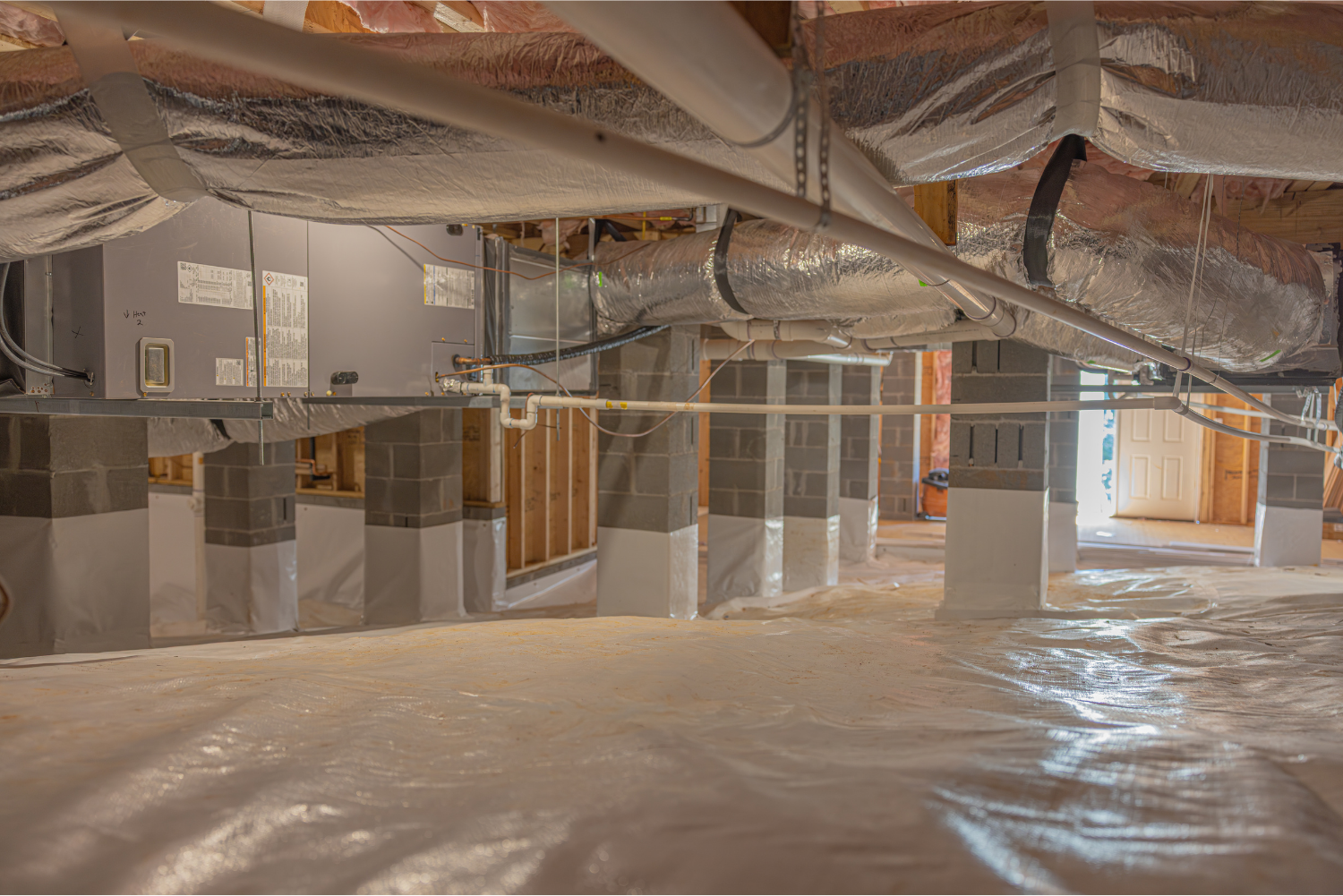
Crawl space encapsulation in Tuscaloosa and Birmingham homes seals the crawl space with a continuous vapor barrier, closes vents and penetrations, insulates rim joists, and adds controlled dehumidification to help create a dry, conditioned cavity. This helps prevent ground moisture from evaporating into the home, stops humid outdoor air from coming through vents, and reduces the movement of mold spores and allergens into living spaces.
For Tuscaloosa homes on clay soils with seasonal humidity, encapsulation also stabilizes subfloor humidity and works with exterior drainage or basement waterproofing. Expected benefits include improved indoor air quality, reduced HVAC load, and a lower risk of wood rot and pest problems.
Turning a vented crawl space into a sealed, conditioned buffer reduces the flow of moist, unfiltered air into your living space and lowers concentrations of mold spores and volatile organic compounds that originate in damp subfloor areas. Controlling relative humidity with a dehumidifier stabilizes the moisture content of wood and can reduce HVAC run time, as ducts and floors stay within the designed temperature and humidity ranges. The result is fewer allergy triggers, lower risk of mold-related health issues, and measurable energy savings as heating and cooling systems work less to fight moisture-driven loads. Regular RH monitoring and dehumidifier maintenance keep these benefits consistent year-round.
Encapsulation pairs well with exterior grading and basement waterproofing to create a full moisture-management strategy for Alabama homes.
Effective drainage begins with managing surface water and extends to safely moving subsurface water away from foundations, and both are essential in Alabama’s clay soils and frequent storms. French drains, sump pump systems, proper grading, and downspout extensions work together to manage water effectively.
French drains capture and redirect subsurface water, sump pumps discharge collected water, and adequate grading and downspouts prevent concentrated surface runoff. The best system depends on lot slope, soil permeability, water table depth, and existing leaks. Routine maintenance (gutter cleaning, sump pump testing, and clearing discharge paths) helps keep systems ready when storms hit.
A French drain is a perforated pipe in a gravel trench that intercepts groundwater and channels it to a collection point, daylight, or a sump basin. That path reduces lateral groundwater pressure by providing an easier route for water, thereby preventing soils adjacent to the foundation from becoming saturated. A sump pump in the basin actively moves accumulated water to a safe discharge location away from the house, preventing it from returning to the foundation area. Together, these systems help lower the local groundwater level and interrupt the hydrostatic cycle that causes leaks and wall intrusion.
Homeowners should regularly test their sump pumps, keep the discharge point clear, and consider installing a battery backup for added reliability during power outages.
Proper grading and downspout extensions are low-cost measures that help stop concentrated runoff from seeping into the foundation zone and increasing hydrostatic pressure. A slope that moves water away—approximately a 5% grade for the first 10 feet—is usually sufficient to reduce pooling. Downspouts extended 6–10 feet keep roof runoff from saturating the soil next to the foundation.
Do-it-yourself checks include watching water flow during heavy rain, checking downspout discharge points, and looking for pooling near the foundation. Call a professional if you need regrading or hardscaping. Proper surface drainage reduces the load on subsurface systems, thereby extending their lifespan and lowering long-term maintenance costs.
Foundation waterproofing prevents moisture-related deterioration by blocking water entry and reducing conditions that cause wood decay, mold growth, and soil expansion, which can lead to foundation shifting and other structural issues. Waterproofing, paired with underpinning or wall reinforcement when necessary, addresses both moisture migration and structural loads that manifest as horizontal cracks, wall bowing, or uneven floors.
Pros use diagnostic tools like moisture mapping and crack monitoring to tell whether the issue needs localized waterproofing or structural repair. Timely intervention with targeted waterproofing or combined structural remediation preserves foundation integrity and cuts the risk of expensive repairs later on.
Signs that your foundation needs attention include horizontal or stair-step cracks in masonry, new or worsening seepage through walls, persistent dampness after rain, and doors or windows that no longer latch properly because the structure has shifted. Small hairline cracks can be monitored, but ongoing seepage, wall movement, or sagging floors require a professional inspection to determine whether waterproofing is sufficient or if foundation stabilization is necessary.
A qualified inspection will map moisture sources, measure hydrostatic pressure, and recommend the least-invasive fix that addresses the root cause. Acting quickly prevents secondary issues, such as mold, wood rot, and escalating structural damage.
Professional waterproofing breaks the chain from moisture to mold and wood rot by keeping foundation walls and nearby structural materials dry and within safe humidity ranges. When combined with dehumidification and a sealed crawl space, waterproofing reduces conditions that allow mold colonization and fungal decay of framing and subfloor systems. Removing persistent moisture sources and using vapor barriers, along with active drainage, prevents repeated exposure that accelerates material deterioration. .
Maintaining drainage and humidity controls after remediation ensures that these protections remain effective, reducing the likelihood of future mold remediation or foundation repairs.
Protecting your Birmingham or Tuscaloosa home from moisture preserves both structural soundness and indoor air quality. By combining effective basement waterproofing, smart drainage, and crawl space encapsulation, you can greatly reduce the risk of mold and costly repairs. Take the first step toward a drier, healthier home. Schedule a free waterproofing inspection with us today and get a moisture-control plan tailored to your local conditions.
Check out our social pages for updates on what we have going on!

Stay Dry Waterproofing LLC
12500 Bedford Forrest Ln, McCalla, AL, 35111
Monday - Friday: 6:00am - 6:00pm